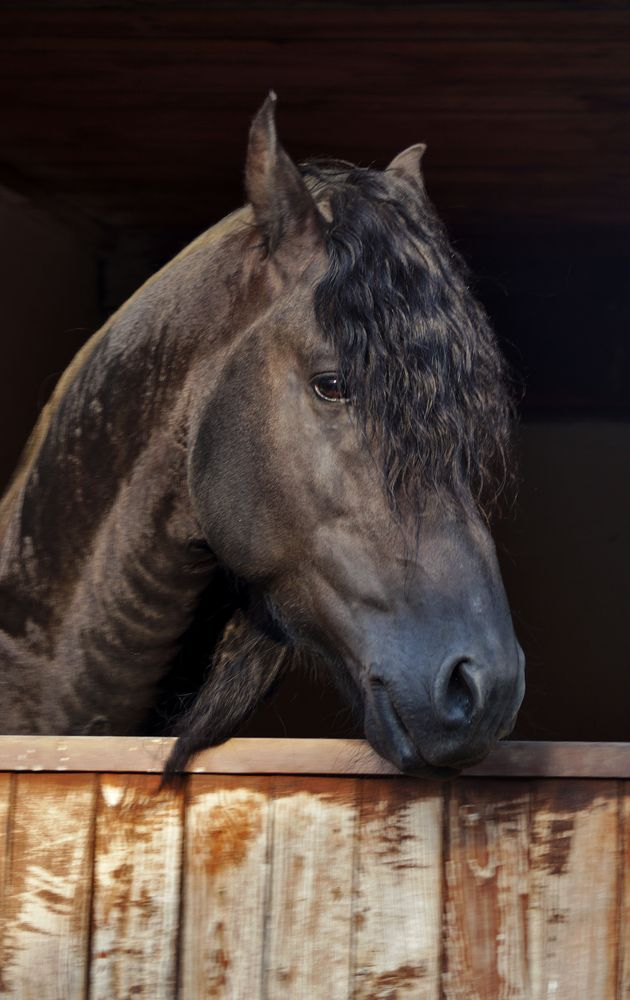
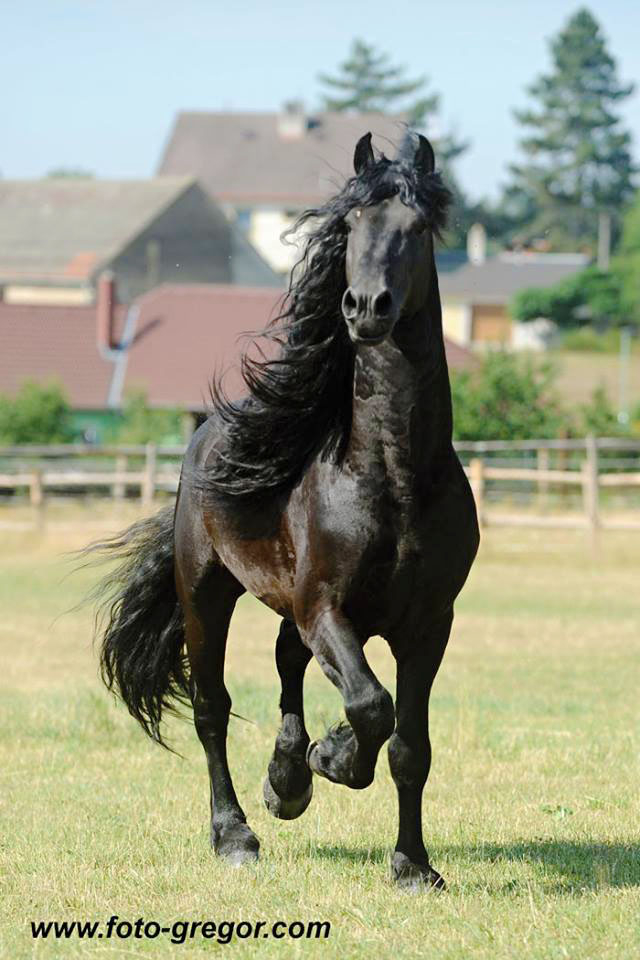
Původem a tradiční oblastí chovu fríských koní je Frísko na severu Nizozemí.
Ačkoliv jsou frísové velice staré plemeno, hrozilo jim téměř vyhubení. Frísové byli známí již před naším letopočtem jako oblíbení koně ve válkách. Kolem roku 150 n. l. jsou zmínky o přítomnosti fríských koní v severní Anglii a Skotsku. Anglický spisovatel Anthony Dent je popisoval jako „staroanglické černé koně“, podobné shirským koním nebo fellským pony.
První písemné označení „fríský kůň“ pochází z roku 1544. Stále pokračuje obliba frísů jako válečných koní, někteří válečníci byli dokonce snadno rozpoznatelní už z dálky podle svého černého oře.
V 17. století byli frísové společně se španělskými koňmi populární nejvíce jako koně pro vysokou drezúru. V té době získali oblibu také jako koně do zápřahu stejně jako zdejší kladrubští koně.
Během 18. a 19. století se frísové koncentrovali pouze do Fríska. Bohatí farmáři jezdívali v typickém dvoukolovém vozíku – gigu – taženém párem fríských vraníků každou neděli do kostela.


Ke konci 19. století nastala vážná krize v chovu frísů. Potřeba těžkých plemen pro zemědělství vytlačila lehčí frísy na okraj zájmu. Zemědělci křížili své noblesní černé perly s těžkými chladnokrevnými plemeny. Vznikali koně sice těžcí, ale jinak nevzhlední. Naštěstí se 1.5.1879 skupinka nadšenců setkala v hospodě De Drie Romers ve fríském městečku Roordahuizum a založili slavnou plemennou knihu „Het Friesch Paarden Stamboek“.
Bohužel se oživení fríského plemene ukázalo jako téměř nemožné. Vliv chladnokrevných koní byl příliš silný a čistokrevné linie pomalu vymíraly. V roce 1913 zůstali již pouze 3 starší plemenní hřebci. Tito tři hřebci nakonec založili hlavní linie, ze kterých pochází všichni současní moderní fríští koně. Ačkoliv se situace zdála katastrofická, nakonec se zázrakem podařilo fríské plemeno oživit. Velkou měrou se na záchraně podíleli sami koně – především jejich úžasný charakter, přizpůsobivost, inteligence, přátelská povaha a obrovská chuť do práce. Vždy během vývoje dodržovali chovatelé jednu hlavní podmínku – fríský kůň musí být černý, mít bohatou hřívu, ohon a rousy. Proto jsou frísové nezaměnitelní s jinými plemeny.
Okolo roku 1960 nastala 2. krize v chovu fríských koní – postupný nástup mechanizace vytlačil fríské koně z polí a byli v podstatě nadbyteční. V roce 1965 bylo v plemenné knize zapsáno již pouze 500 klisen.
Ale znovu dokázali frísové svou neuvěřitelnou přizpůsobivost a z koní na pole se téměř přes noc stali koňmi pro volný čas a zábavu.